



 |
 |
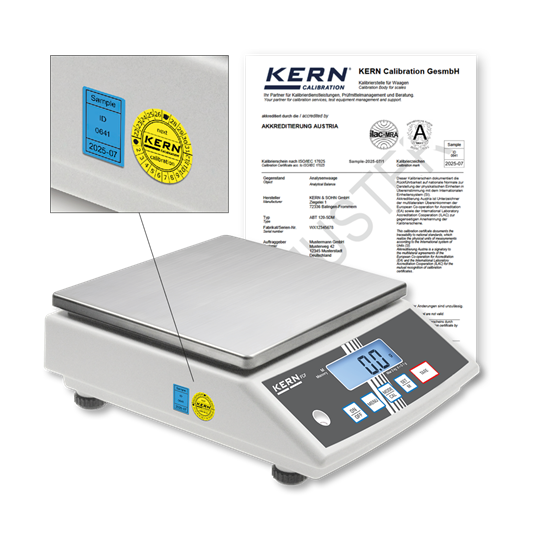
Accredited calibration (not a legally regulated area) |
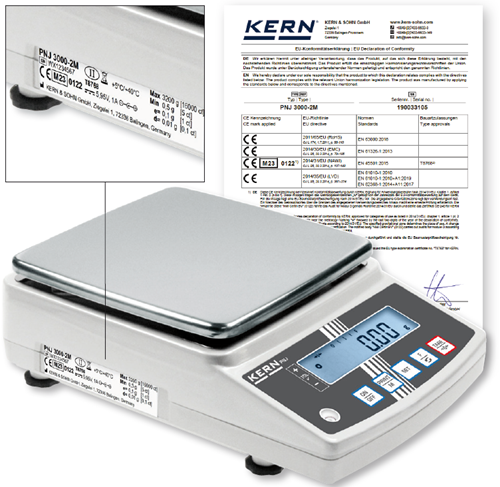
Verification (legally regulated area) |
Why?Accredited calibration whenever a test device (e.g. balance) is used in a QM process. |
Why?The use of scales subject to calibration is required by law in commercial transactions, for example, when the price of goods is determined by weighing, in the manufacture of medicines in pharmacies, in the manufacture of prepackaged goods, and in medicine. |
What?Any test equipment in correct working order can be calibrated. |
What?Only scales with type examination certificates may be calibrated. |
How?Determination of accuracy worldwide by a laboratory accredited according to DIN EN ISO/IEC 17025. Traceability to internationally recognised standards. The calibration certificate with accreditation symbol confirms both the metrological properties of the test equipment and the general requirements for test equipment monitoring. |
How?Testing for calibration error limits (tolerances). National regulations apply – for consumer protection. EU directives apply to placing on the market (conformity assessment). Subsequent market surveillance is regulated at national level. |
Where?Internationally recognised. This is monitored by the EA (European co-operation for Accreditation) and the ILAC (International Laboratory Accreditation Cooperation), as well as, in Austria, for example, Akkreditierung Austria. |
Where?EU declaration of conformity with CE marking as ‘initial verification’ valid throughout the EU. Re-verification and national declarations of conformity are only recognised nationally. |
When?The operator regulates the use of test equipment and periodic recalibration intervals itself. |
When?The legislator regulates the use of scales/test weights and the recalibration intervals. National regulations apply here. |