



The following explains the components of a calibration certificate for non-automatic weighing instruments.
The contents may vary depending on the type of weighing instrument.
1. 'Official' Dokument
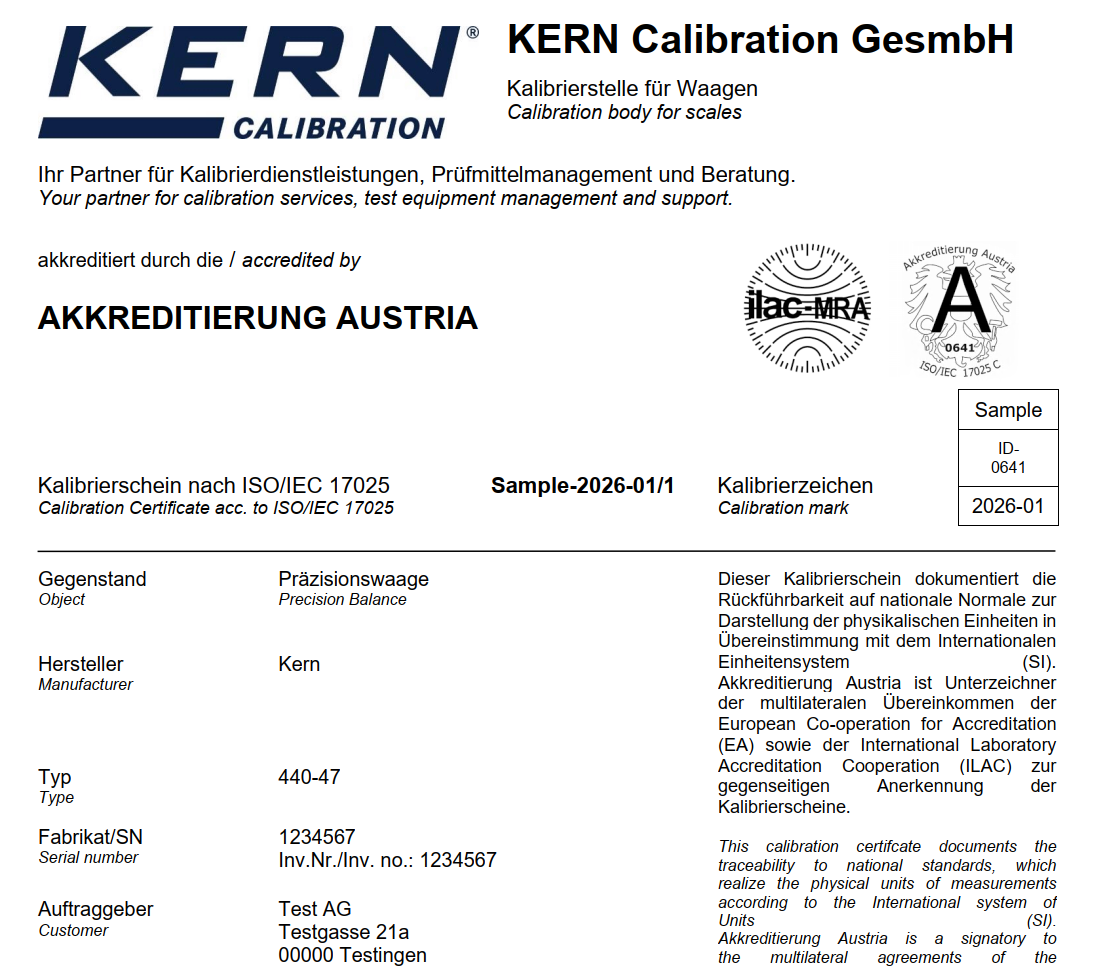
The calibration laboratory of KERN Calibration GesmbH (ID: 0641) is accredited by Akkreditierung Austria. The calibration certificate with accreditation symbol is internationally recognised and available in many languages.
2. Calibration object
The calibration object and type or model with serial number are documented. This prevents mix-ups and ensures that the calibration certificate can be assigned to a specific balance.
3. Traceability
The reference standards of the accredited laboratory are monitored in strictly defined cycles and periodically adjusted to the national and thus international standard. This is carefully documented in accordance with regulations and indicated on the calibration certificate. This ensures the fundamentally important traceability to the national standard.
4. Client
The client or operator of the calibrated test equipment is clearly indicated on the first page of the calibration certificate.
5. Stamp and signature
According to DIN EN ISO/IEC 17025, only the name of the person responsible for approving the report is required. Due to the importance of the report, we also print the laboratory stamp and the name and signature of the laboratory manager and the person responsible for approving the report.
6. Messtechnischer Teil
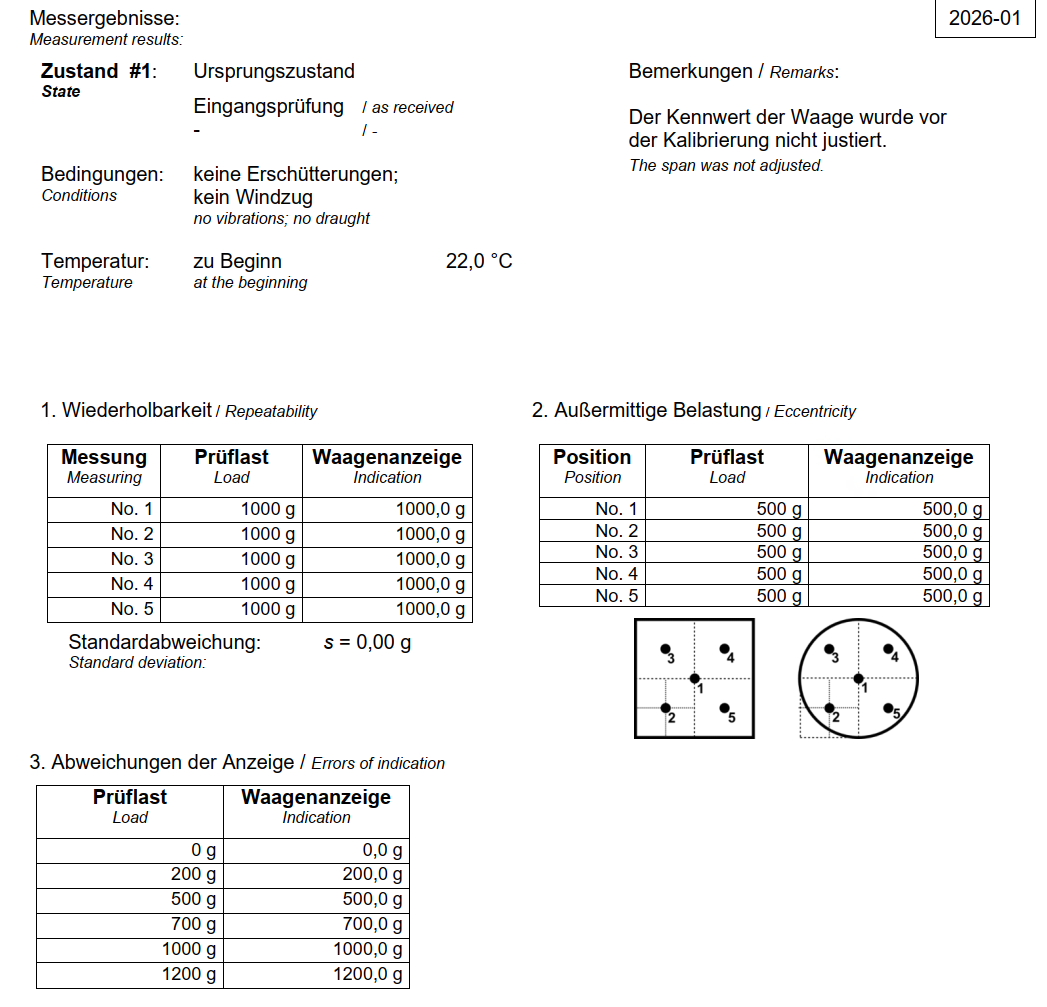
During accredited calibration, three metrological tests are carried out, among other things. These are tests of repeatability, display deviation and off-centre loading. This allows the balance to be fully characterised.
The measuring points are distributed according to EURAMET cg-18 as standard. However, additional measuring points are also possible for testing the errors of indication and repeatability. Please let us know your desired additional measuring points in your order so that they can be taken into account during calibration.
If several calibrations (‘as found’ / ‘as left’) have been carried out on the balance due to an adjustment or repair, the calibration certificate contains a separate section for each of these states with the corresponding measured values and results.
Please note that this is only done at the customer's request. As a rule, you will receive the calibration certificate with the ‘as left’ values.
If you also require the values prior to any adjustment or repair, please let us know in your order.
As this is an optional service, it will be charged separately.
An explanation of ‘as found/as received’ and ‘as left/as returned’ calibration can be found here.
7. Measurement uncertainty of a balance
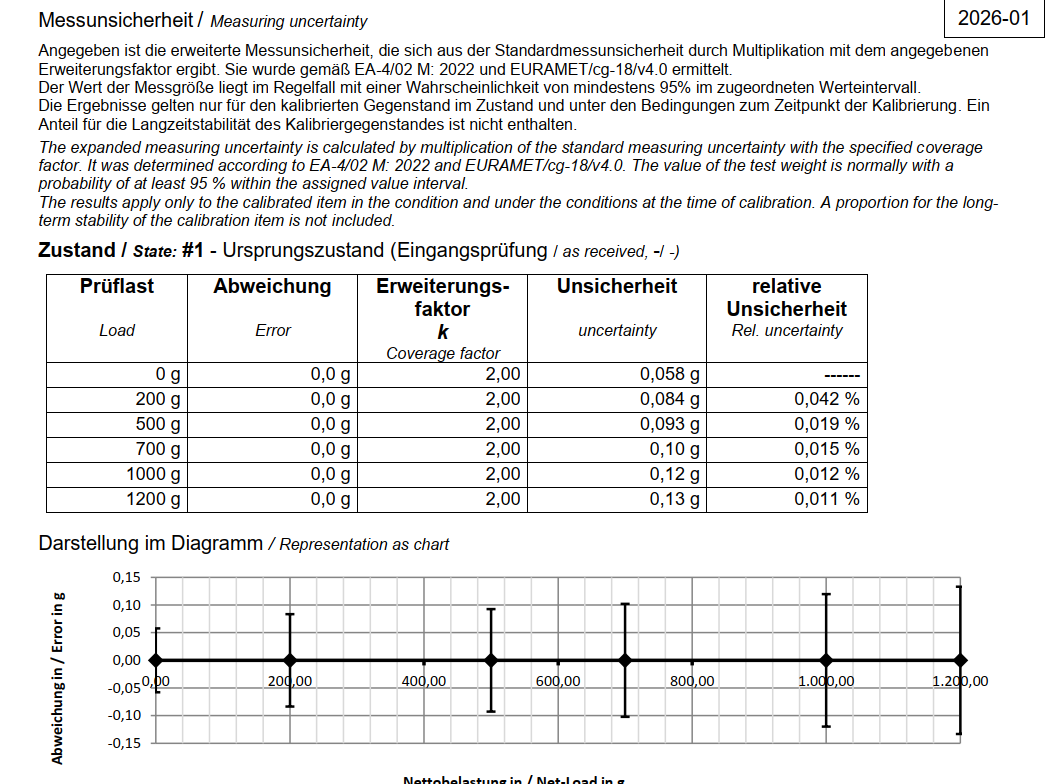
It is determined individually for each balance according to a precisely defined test procedure and documented in the calibration certificate. It depends on various internal and external factors.
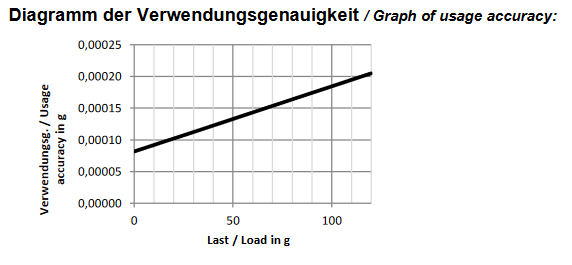
8. Accuracy of use
The accuracy of use indicates the uncertainty in the use of the measuring device on site by the user. This value, determined by a mathematical equation, is influenced by temperature changes, type of use and many other factors.
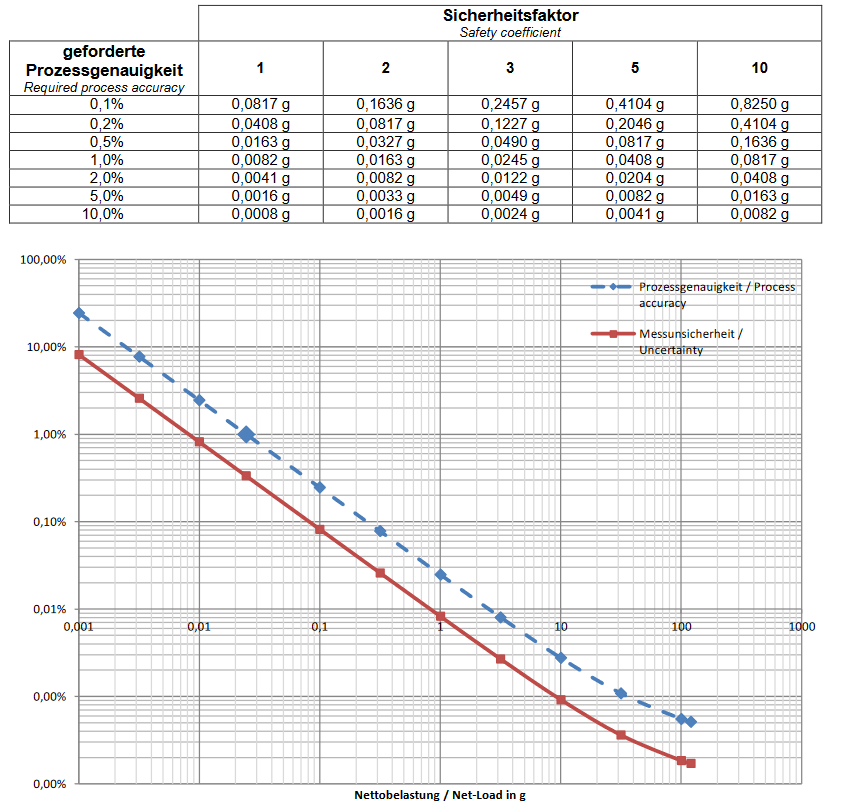
9. Minimum weight (additional service)
The smaller the weighing capacity, the greater the relative measurement uncertainty. It is important for those responsible for the weighing process to determine the deviations from minimum loads that occur. Determining the minimum weighing capacity clearly illustrates the various requirements for weighing accuracy in relation to the weighing capacity.
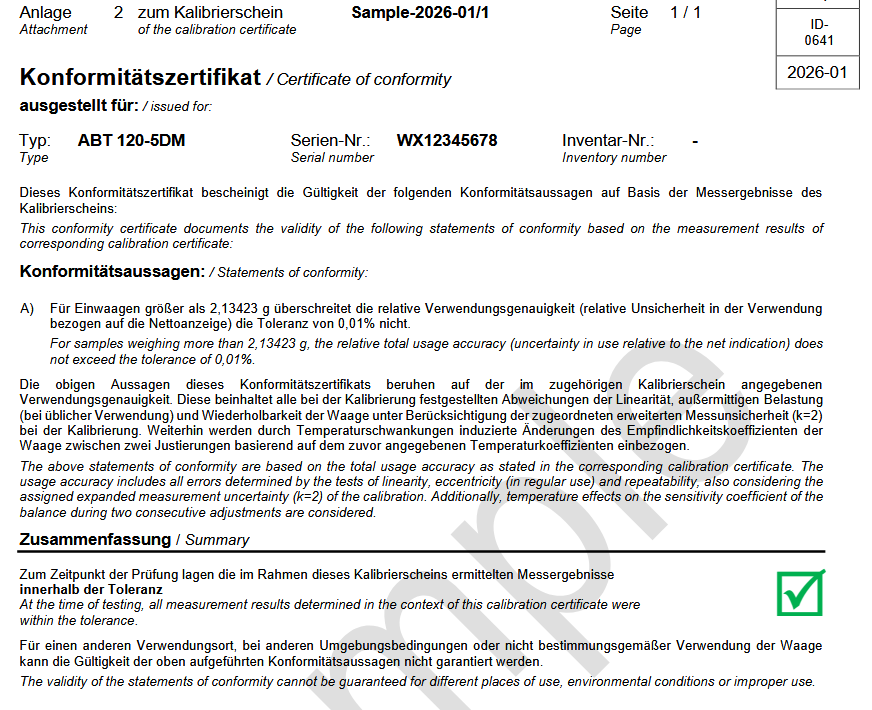
10. Certificate of conformity (additional service)
A certificate of conformity in conjunction with a calibration certificate with accreditation symbol serves as documented proof that the balance meets your defined process requirements. Various tolerance specifications can be selected here:
- Accuracy of use and/or calibration results relative
- Accuracy of use and/or calibration results absolute
- Measurements according to manufacturer's specifications
- Measurements according to customer specifications
A certificate of conformity can be issued for a new calibration, but also for a recalibration, regardless of the manufacturer. Further information on certificates of conformity can be found here.